How Design and Marketing Work Together to Build Brands
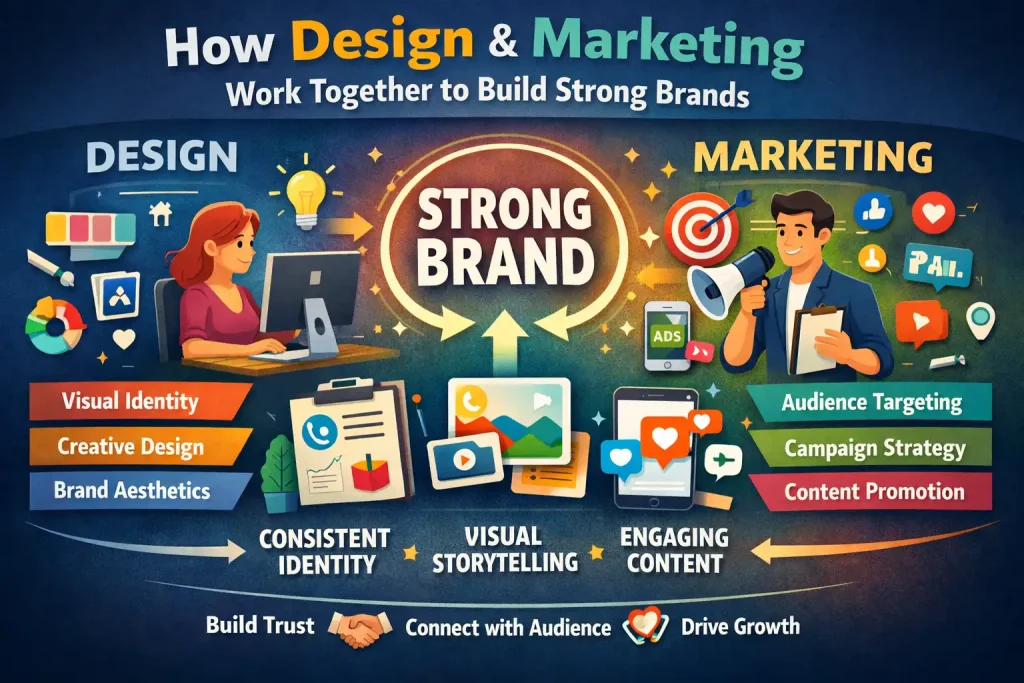
In today’s competitive digital world, building a strong brand is no longer just about having a good product or service. Businesses succeed when they create meaningful connections with their audience, communicate clearly, and present a consistent identity across every platform. This is where design and marketing come together. While marketing focuses on strategy, communication, and audience engagement, design transforms those ideas into visual experiences that people can recognize, remember, and trust. When both work together effectively, they create powerful brands that stand out in crowded markets.
Design is often the first thing people notice about a brand. Before reading a slogan or understanding a company’s mission, customers see colors, logos, typography, and visual layouts. These elements instantly create an impression, whether professional, modern, luxurious, or playful. Marketing, on the other hand, ensures that this impression reaches the right audience at the right time through the right channels. Without marketing, even the most beautiful design may go unnoticed, and without design, marketing messages may fail to capture attention. Together, they create a balanced system that attracts, communicates, and converts.
A strong brand begins with identity, and this identity is shaped through collaboration between designers and marketers. Marketing teams define the brand’s target audience, positioning, and core message, while designers translate those ideas into visual language. For example, a brand targeting young audiences may require bold colors, dynamic layouts, and modern typography, whereas a luxury brand may use minimalistic design, elegant fonts, and refined color palettes. Design decisions become more meaningful when guided by marketing insights, ensuring visuals resonate emotionally with the intended audience.
Consistency is another important factor that highlights the connection between design and marketing. Successful brands maintain a unified look and message across websites, social media, advertisements, packaging, and promotional materials. Marketing strategies rely heavily on brand recognition, and consistent design helps audiences instantly identify a brand wherever they encounter it. When visuals remain consistent, customers develop familiarity and trust, which plays a major role in long term brand loyalty. Inconsistent visuals, however, can confuse audiences and weaken brand credibility, even if marketing campaigns are strong.
Design also enhances storytelling, which is a key element of modern marketing. Today’s consumers do not just buy products; they connect with stories and experiences. Marketing defines the story a brand wants to tell, such as innovation, reliability, sustainability, or creativity. Design then brings that story to life through imagery, layout, and visual tone. A well-designed campaign can communicate emotions faster than words alone, helping audiences understand a brand’s personality instantly. Through visual storytelling, brands create memorable experiences that remain in customers’ minds long after they see an advertisement.
Another important way design supports marketing is by improving communication clarity. Marketing messages must be easy to understand, especially in a digital environment where attention spans are short. Good design organizes information in a visually appealing and readable way, guiding users toward key messages and actions. Elements such as spacing, hierarchy, icons, and color contrast help audiences quickly grasp information without feeling overwhelmed. When design simplifies communication, marketing becomes more effective because customers can easily understand the value being offered.
Digital marketing channels particularly highlight the importance of strong design collaboration. Social media platforms, websites, and online advertisements rely heavily on visual content to capture attention within seconds. Marketing teams analyze audience behavior and campaign goals, while designers create engaging visuals that encourage clicks, shares, and interactions. A well designed social media post or advertisement can significantly increase engagement rates and conversions because people naturally respond more to attractive and well-structured visuals.
Brand trust is another area where design and marketing work together closely. Marketing builds trust by delivering consistent messaging, valuable content, and positive customer experiences. Design strengthens that trust by presenting the brand professionally and authentically. Poor design can make even a reliable business appear unprofessional, while strong design creates confidence and credibility. Customers often judge a company’s reliability based on its visual presentation, especially online, where first impressions happen instantly.
The collaboration between design and marketing also plays a major role in customer experience. Marketing attracts potential customers and brings them into the brand’s ecosystem, but design ensures that their journey is smooth and enjoyable. Website layouts, user interfaces, and visual navigation all influence how easily customers interact with a brand. When design improves usability and accessibility, marketing efforts produce better results because visitors are more likely to stay, explore, and take action. A positive user experience strengthens brand perception and encourages repeat engagement.
In addition, design helps marketing campaigns remain adaptable and innovative. Trends in digital marketing evolve quickly, and brands must continuously refresh their communication to stay relevant. Designers help translate new marketing ideas into creative visuals that align with changing audience preferences while maintaining brand identity. This adaptability allows brands to remain modern without losing their core personality, ensuring long term relevance in dynamic markets.
Ultimately, strong brands are built when design and marketing operate as partners rather than separate functions. Marketing provides the strategic direction by understanding audiences, defining goals, and crafting messages, while design gives those strategies a visual form that people can connect with emotionally. When both disciplines collaborate from the beginning, brands achieve clarity, consistency, and creativity across every customer interaction.
Design and Marketing together create the foundation of successful branding. Marketing ensures that the right message reaches the right people, while design ensures that the message is seen, felt, and remembered. Their combined power shapes perception, builds trust, and strengthens emotional connections with audiences. Businesses that integrate design and marketing effectively are better equipped to create recognizable identities, deliver meaningful experiences, and build strong brands that thrive in an increasingly competitive digital landscape.